

Everybody has that one place they’ve always wanted to visit. A place that they imagine to be out-of-this-world beautiful or otherwise absolutely incredible. For me, that’s Giverny.
Perhaps you have also imagined a place so much in your mind that you inevitably worry you’ll be let down when you see it in real life. After all, Japan has the Paris Syndrome: The shock when people’s vision of Paris doesn’t live up to the city they imagined. Though far away from falling ill from such a shock, I try to keep my expectations realistic when I’m on holiday – go with the flow, check for local advice, plan the important stuff in advance. You know, cover the basics, then be open to new experiences and cultures.
Enter Giverny. It’s the one place I had been dreaming of visiting since I was a child (yes, an actual child). The charm of Monet and the Impressionists holds me in a tight grip that hasn’t loosened one bit over the years. So, when I visited Paris in August 2018, and my lovely friend and local guide announced she was willing to take me there, I was giddy with excitement. And finally ready to see if it would live up to all the paintings.
Heading to Giverny
We started the day with a typical local breakfast (black coffee, a croissant) – sur le train – and packed a picnic of saucisson, baguette and cheese. So very French!
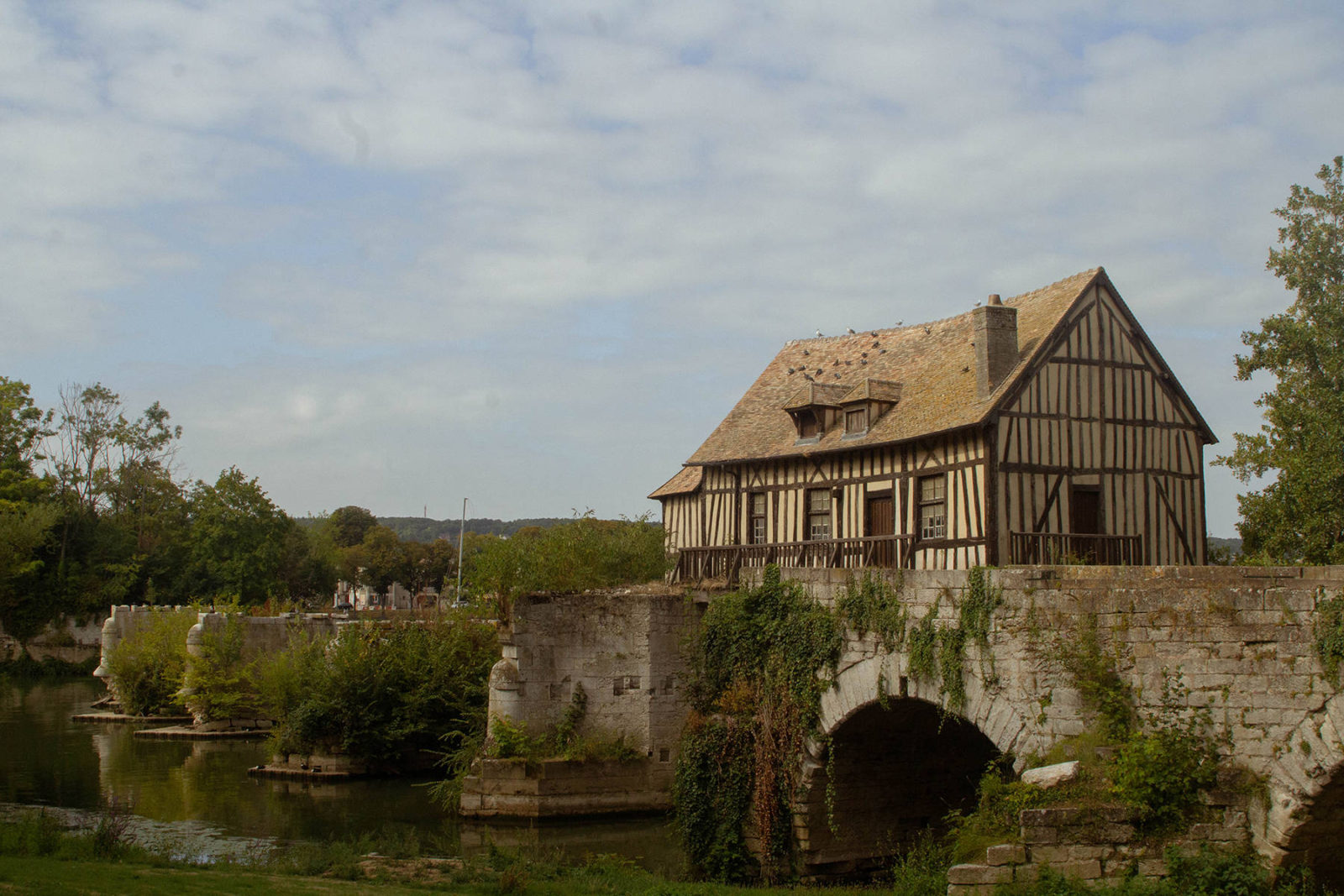
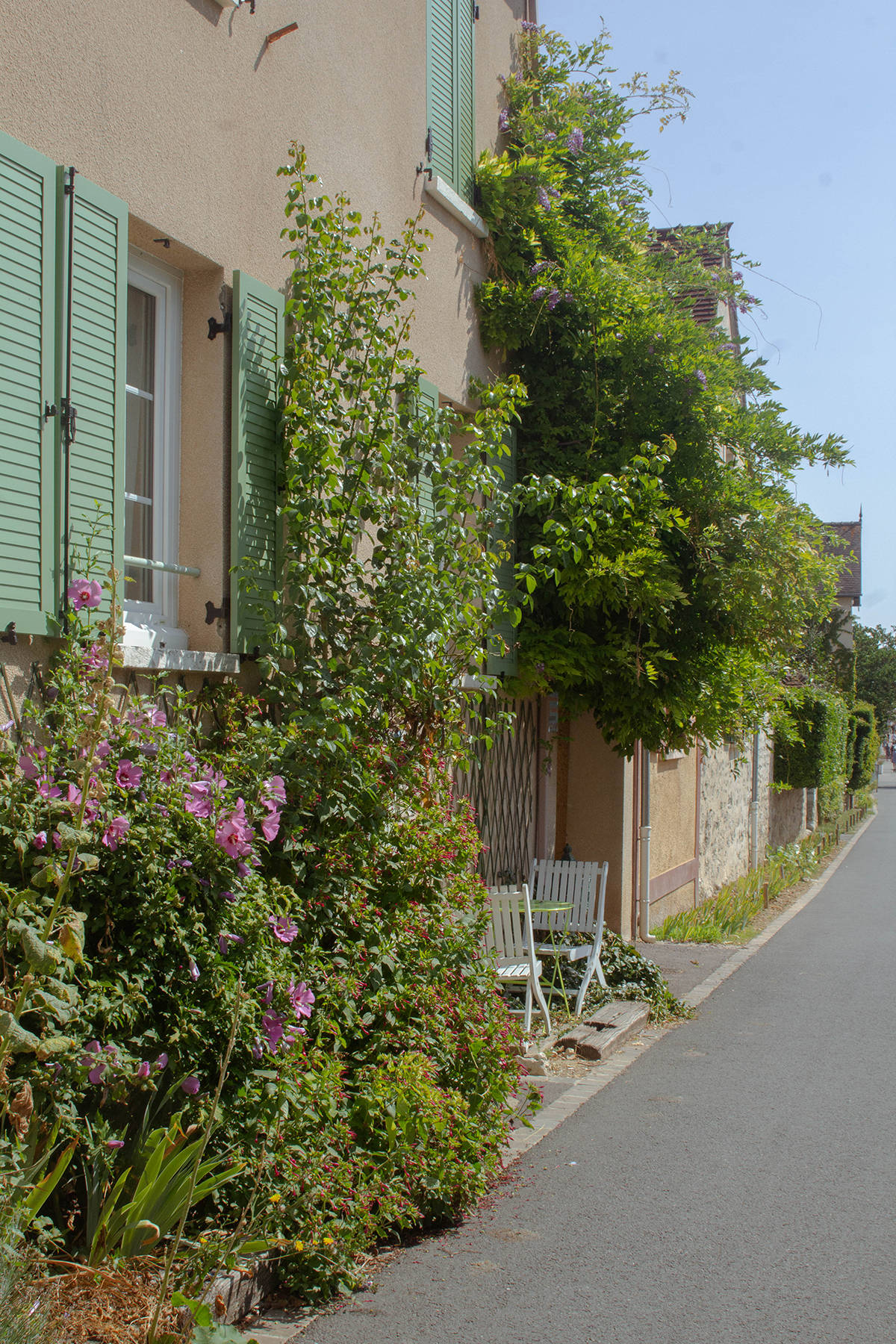
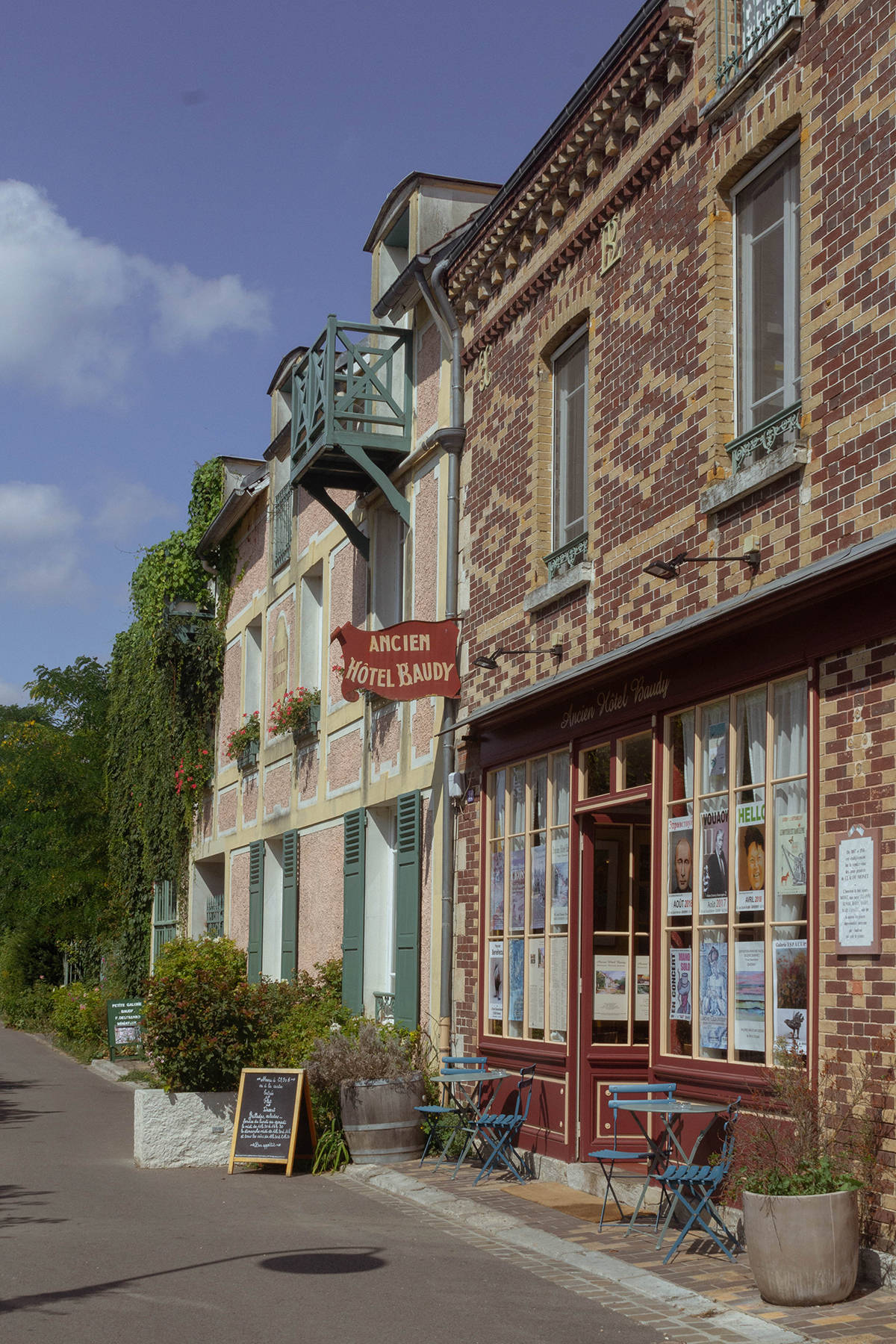
Arriving at Vernon-Giverny, we opted to eschew the crowds that packed the shuttle bus to the painter’s house and gardens, and instead walk the 6km along the Seine and through the commune of Giverny. Passing by the Old Mill, quaint, ivy-covered farmhouse B&Bs and the cemetery where Monet is buried, it was easy to see why so many painters felt at home here. Along the Rue Claude Monet, piano music filled the air, and colourful planting in around houses and in beer gardens – which were still empty – invited you to linger.
Still, we pressed on, skipping the rather long queue with our pre-booked tickets. Heading down a tiny lane to the side entrance, peace and quiet (and some cooler air) descended around us.
Le Jardin d’Eau
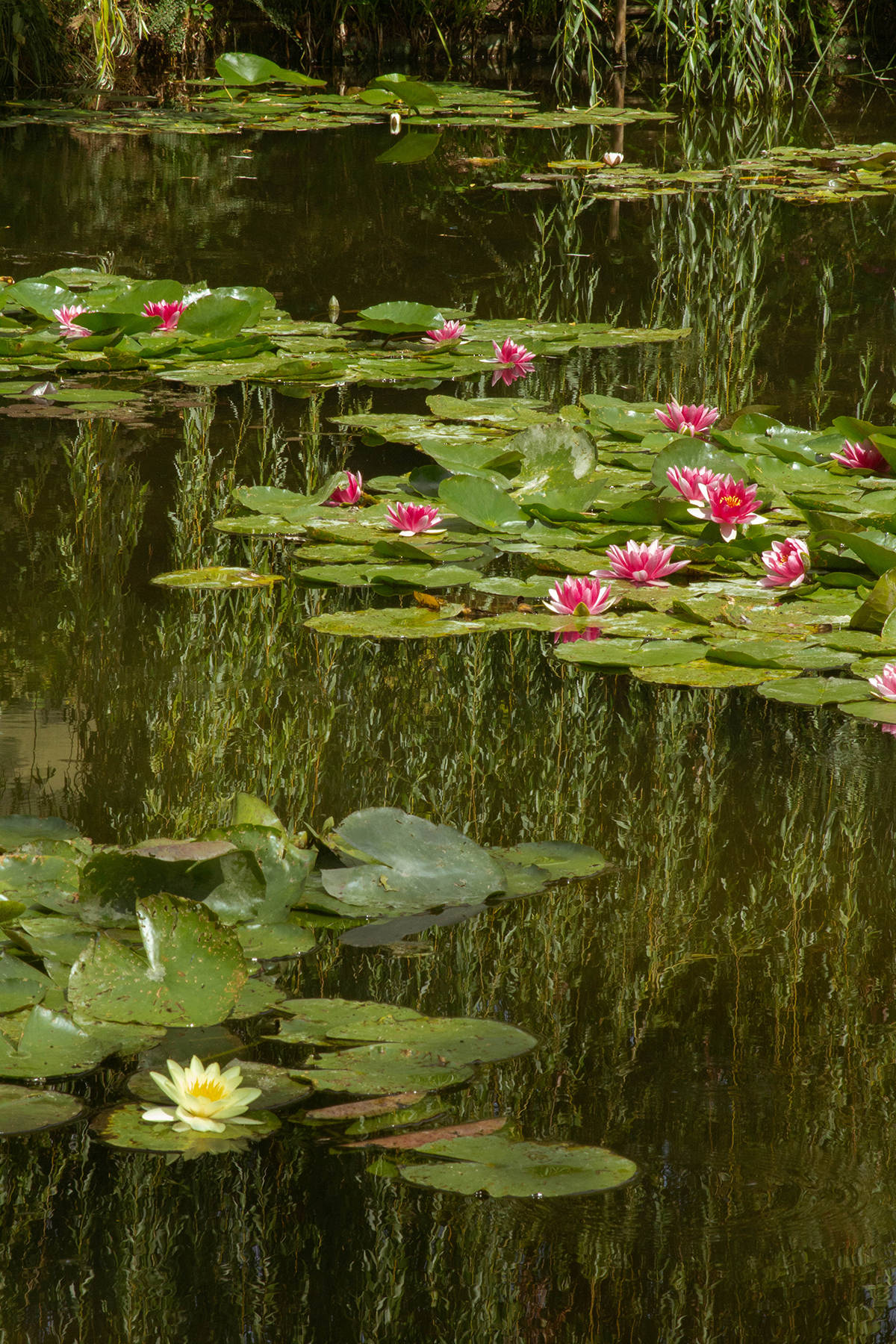
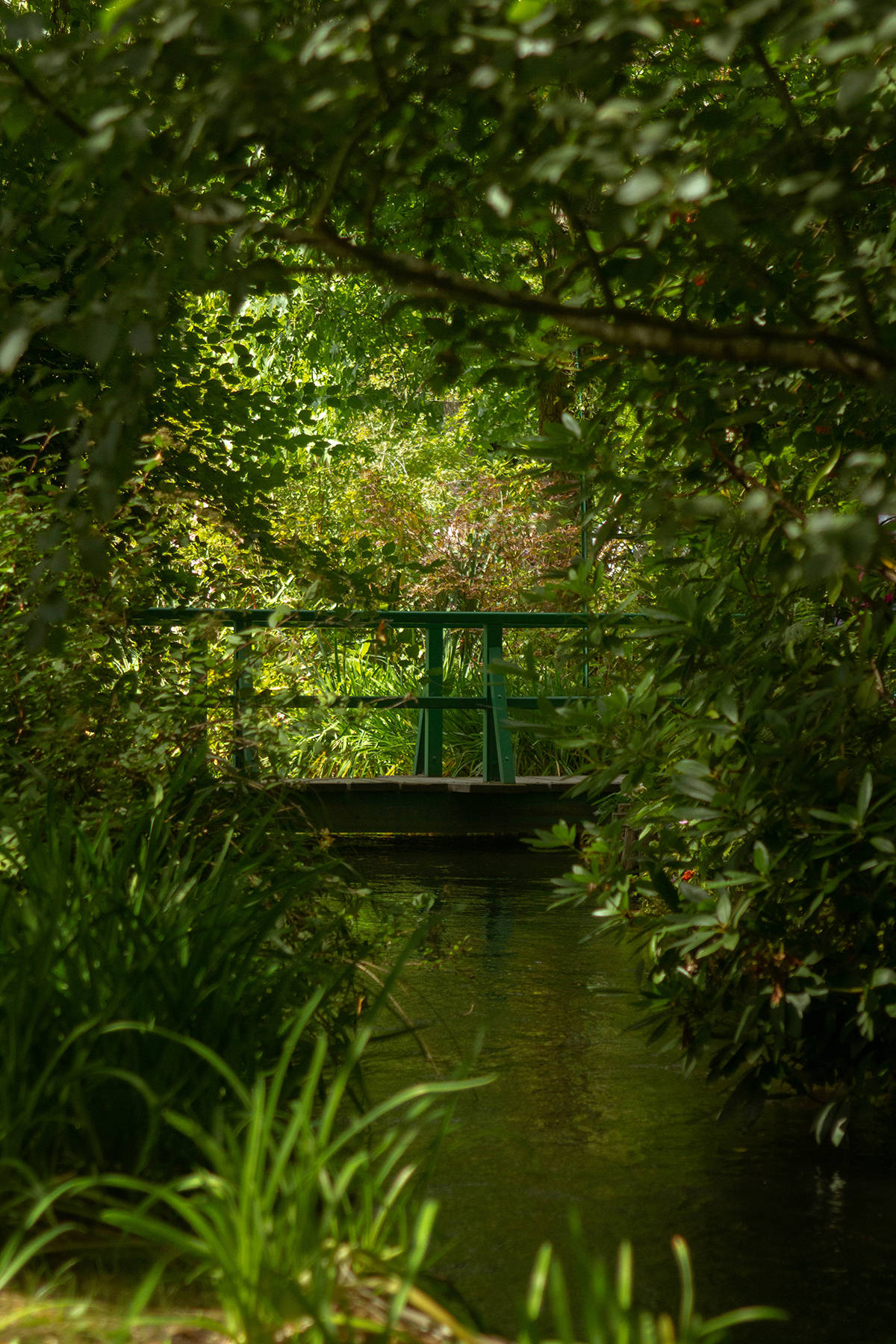
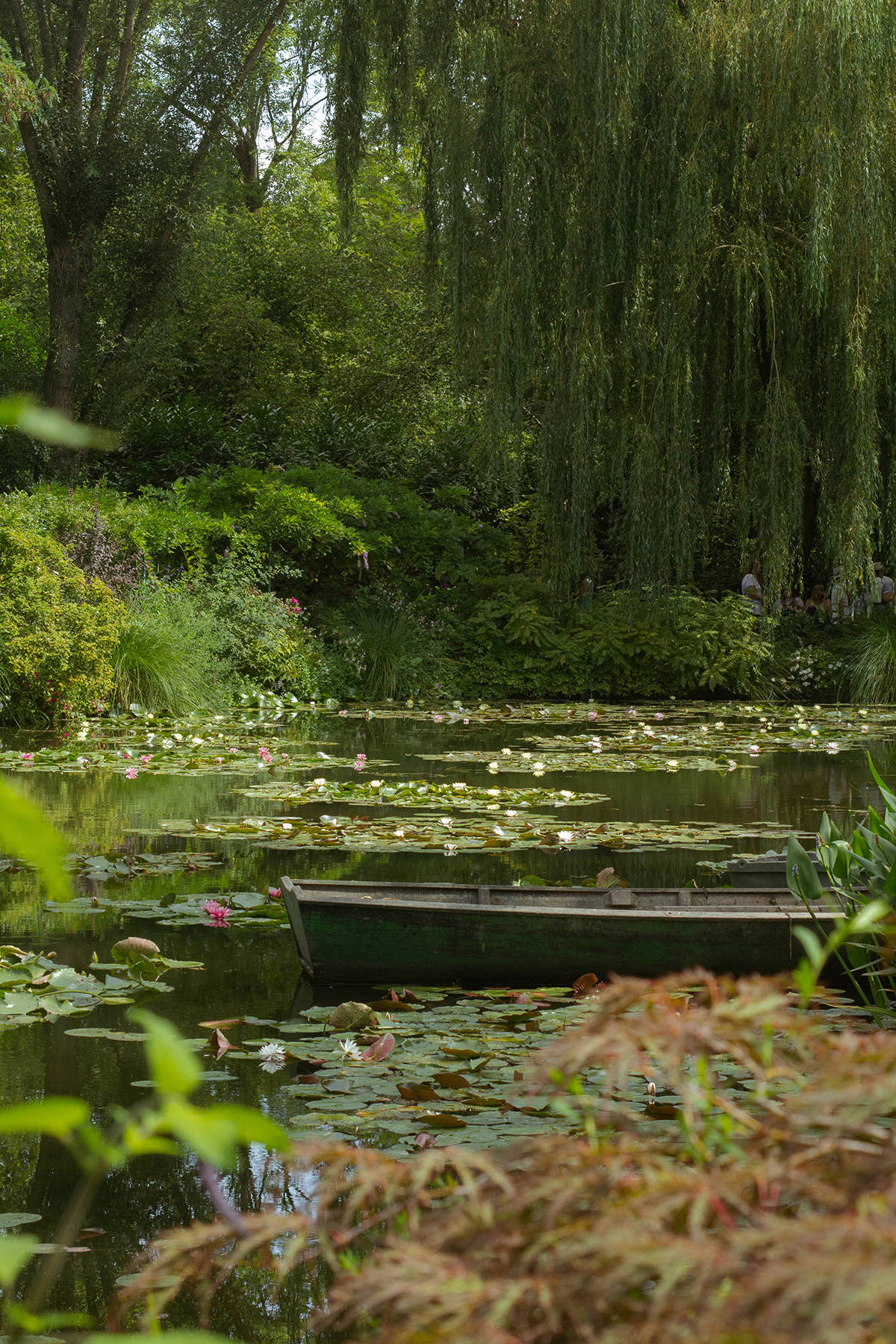
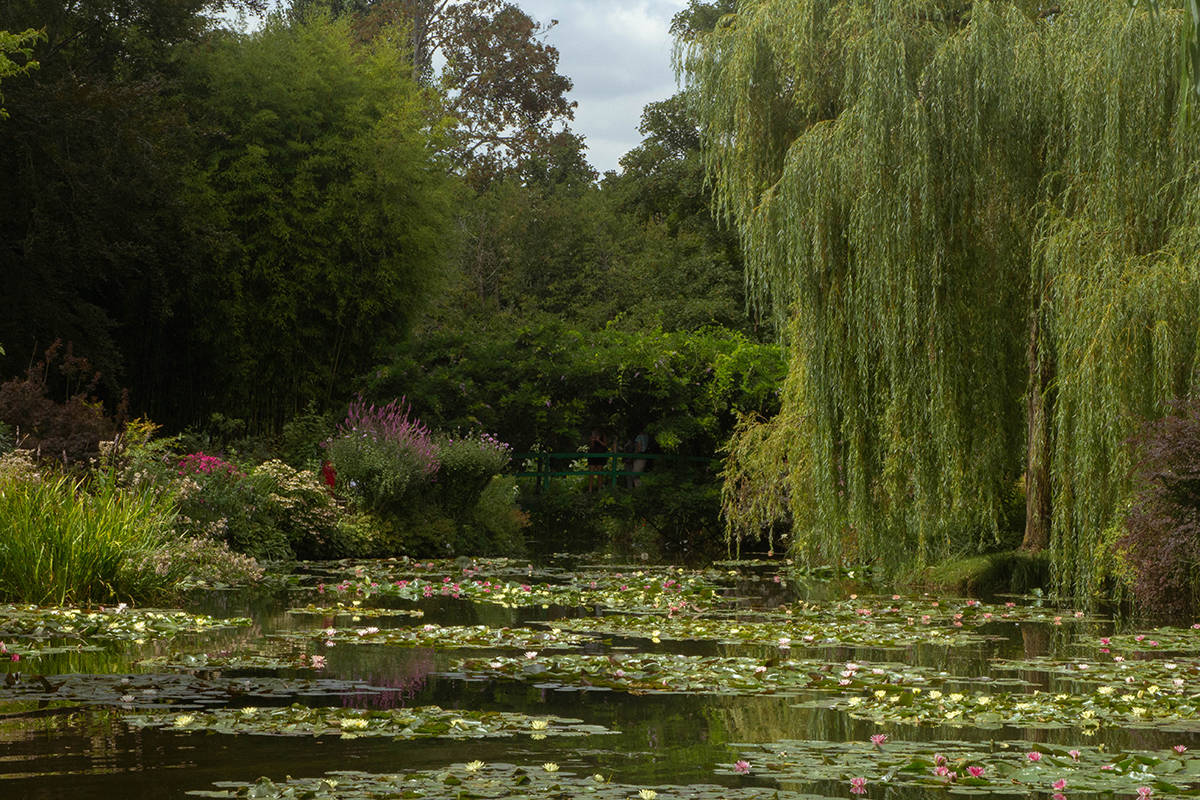
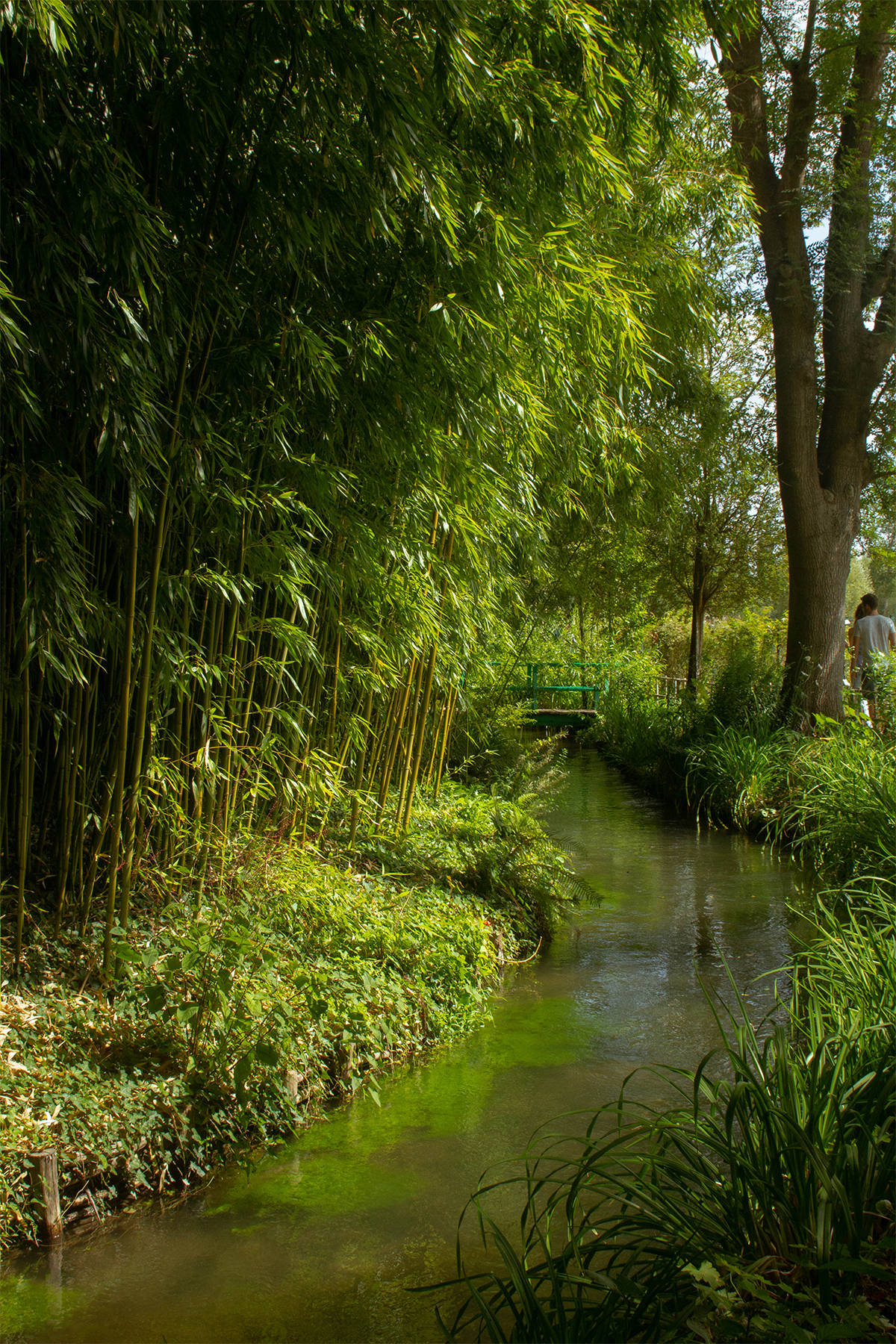
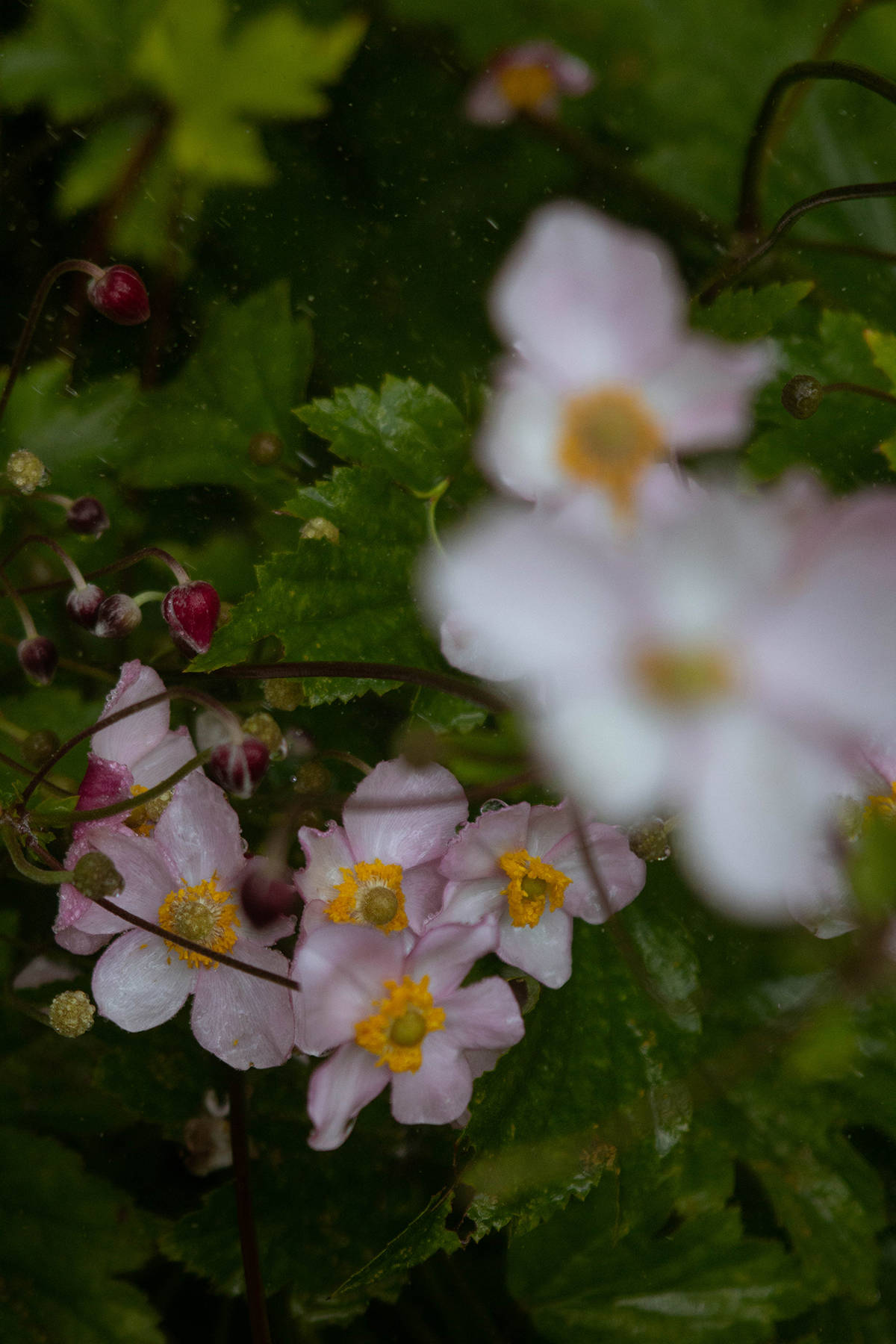
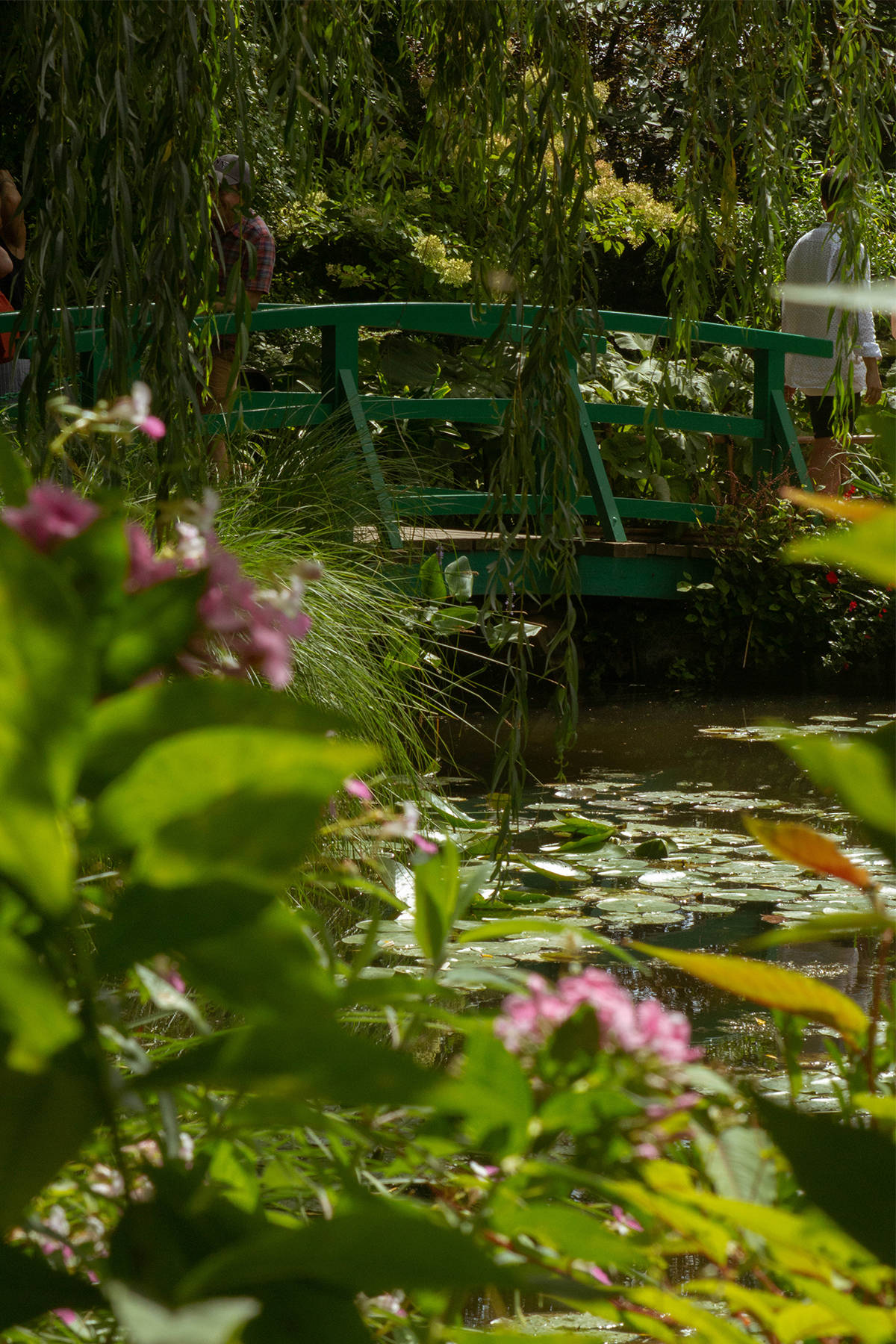
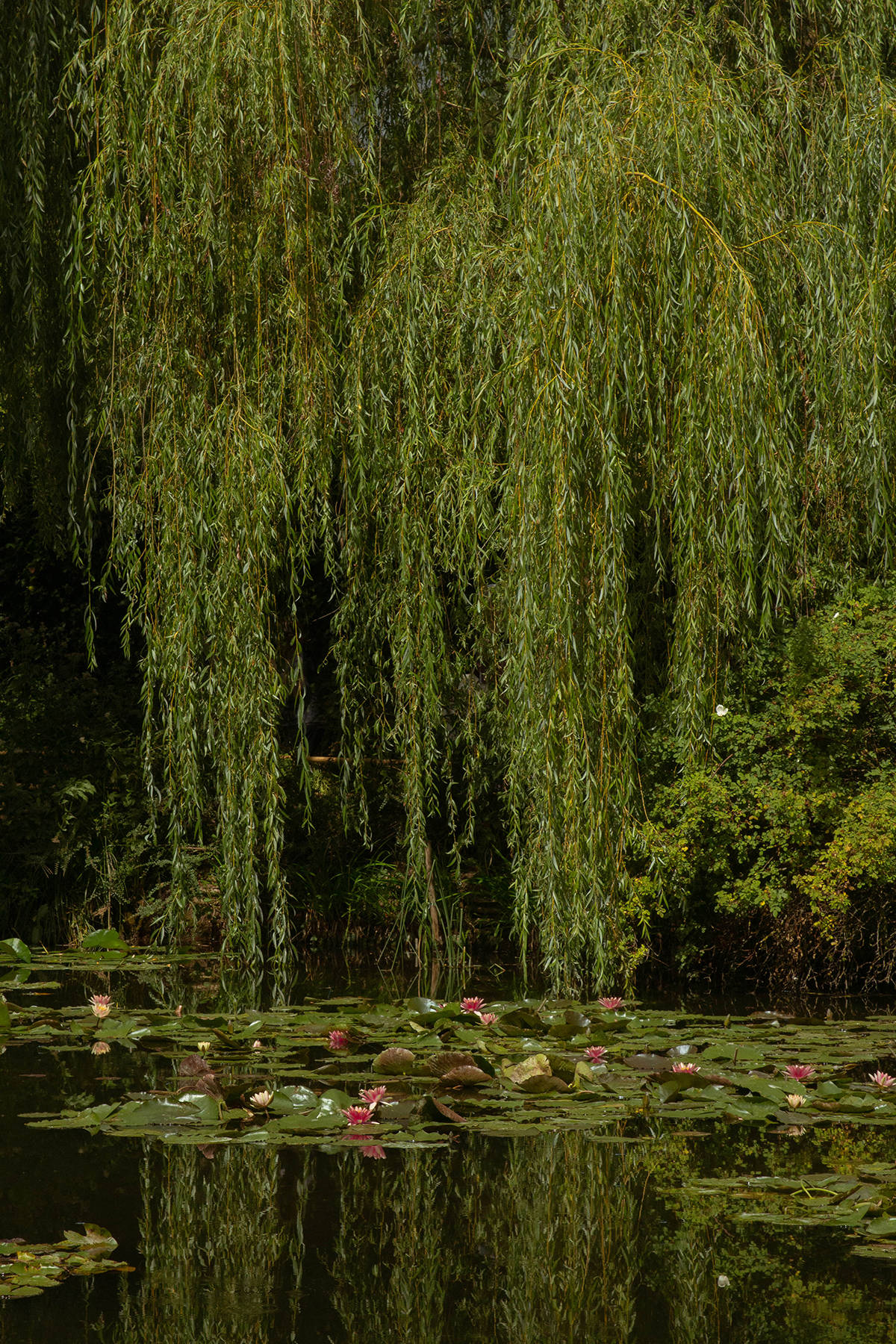
We headed through an underpass and immediately found ourselves in the Jardin d’Eau, the Water Garden. Famous for Monet’s depiction of the bridges spanning a pond carpeted with waterlilies. A bamboo forest along a small stream is traversed by bridges that lead to viewpoints and paths around. August is the perfect time to visit if you want to see the gardens exactly as the artist would have when he created his most famous series of paintings – Les Nymphéas. The water lilies shine in shades of pink, yellow and white, while the flowerbeds and planting along the paths showcase light pink hydrangeas and anemones among others. The bright green bridges are overgrown with purple wisteria, and above them all tower the stunning weeping willows.

Le Clos Normand
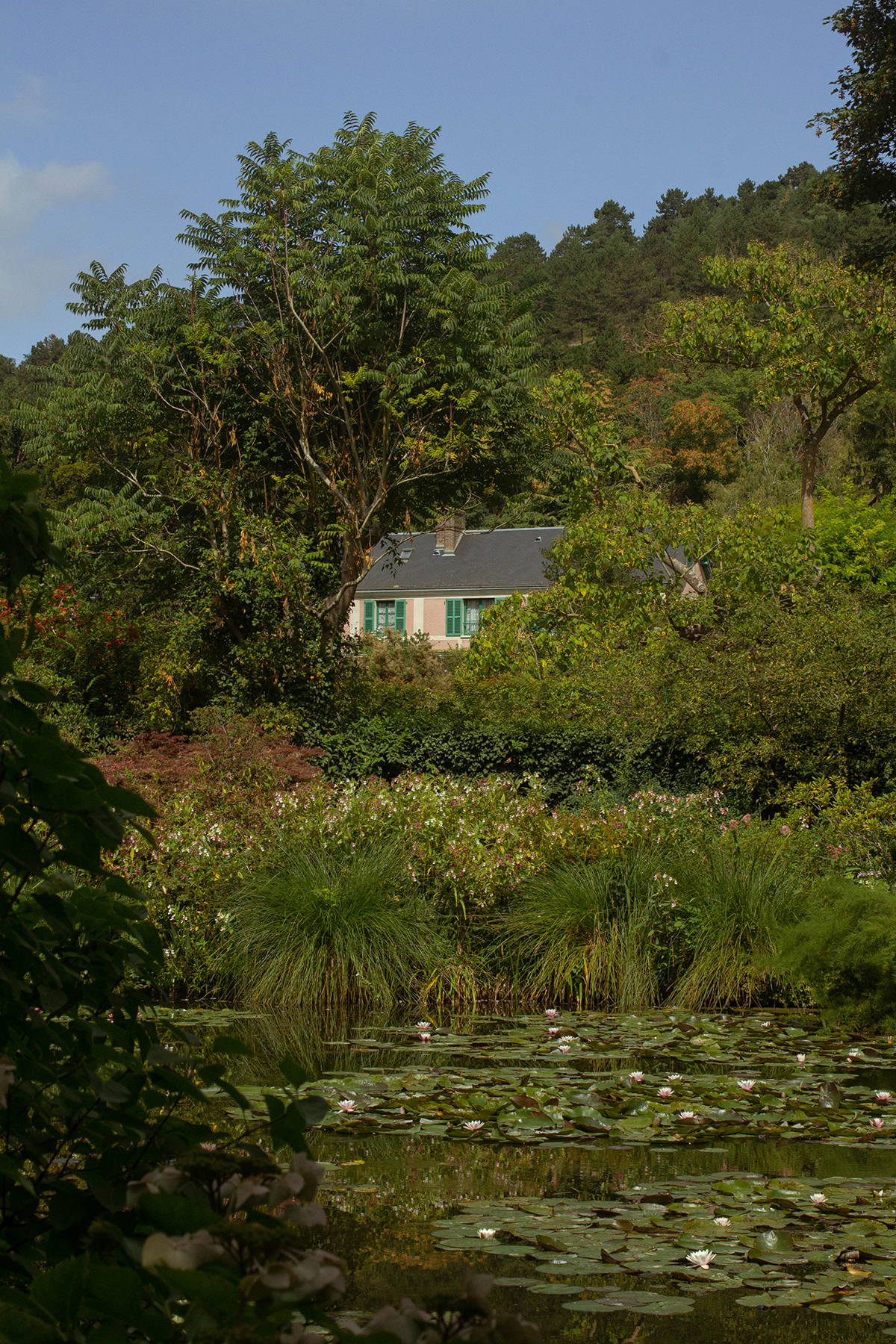
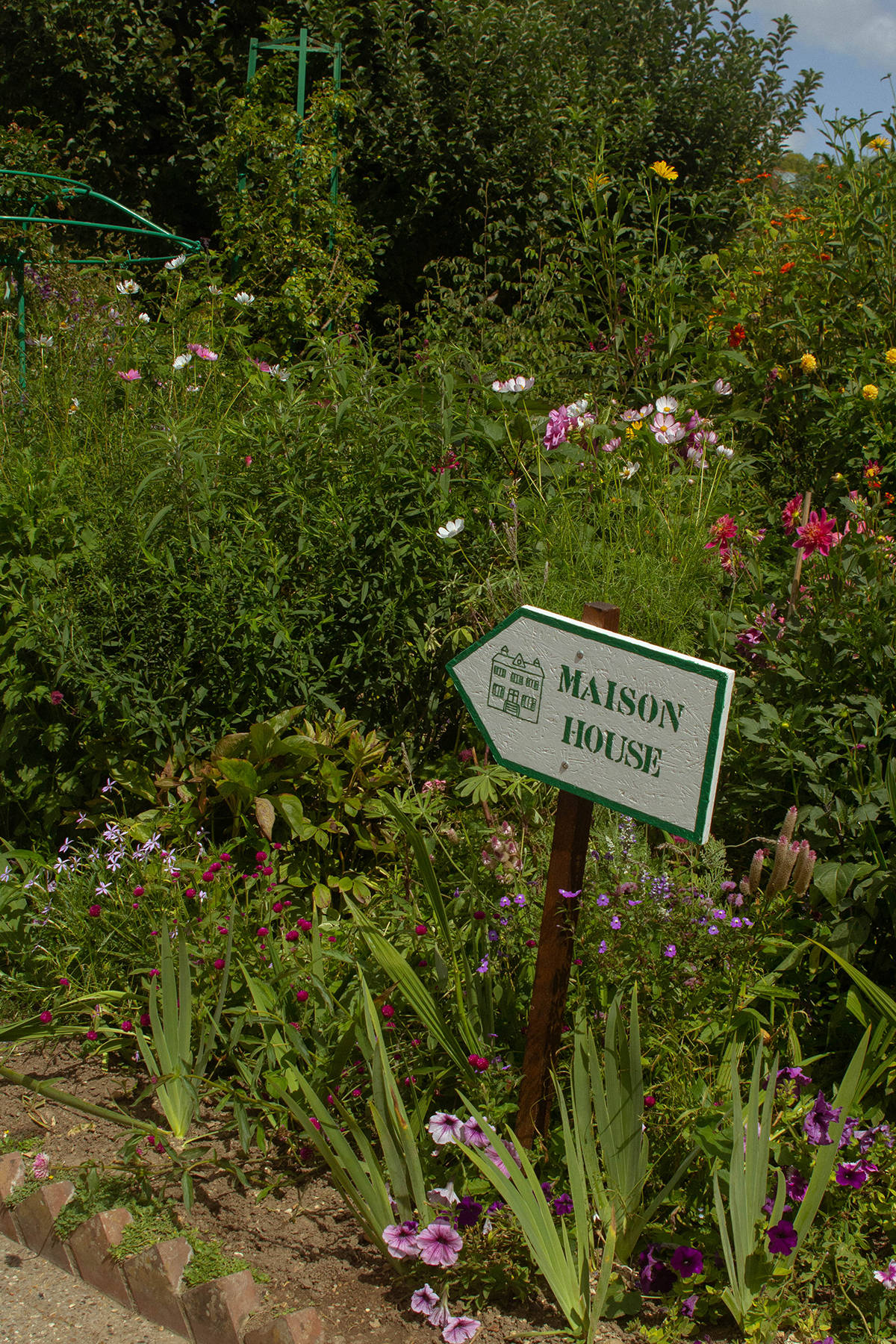
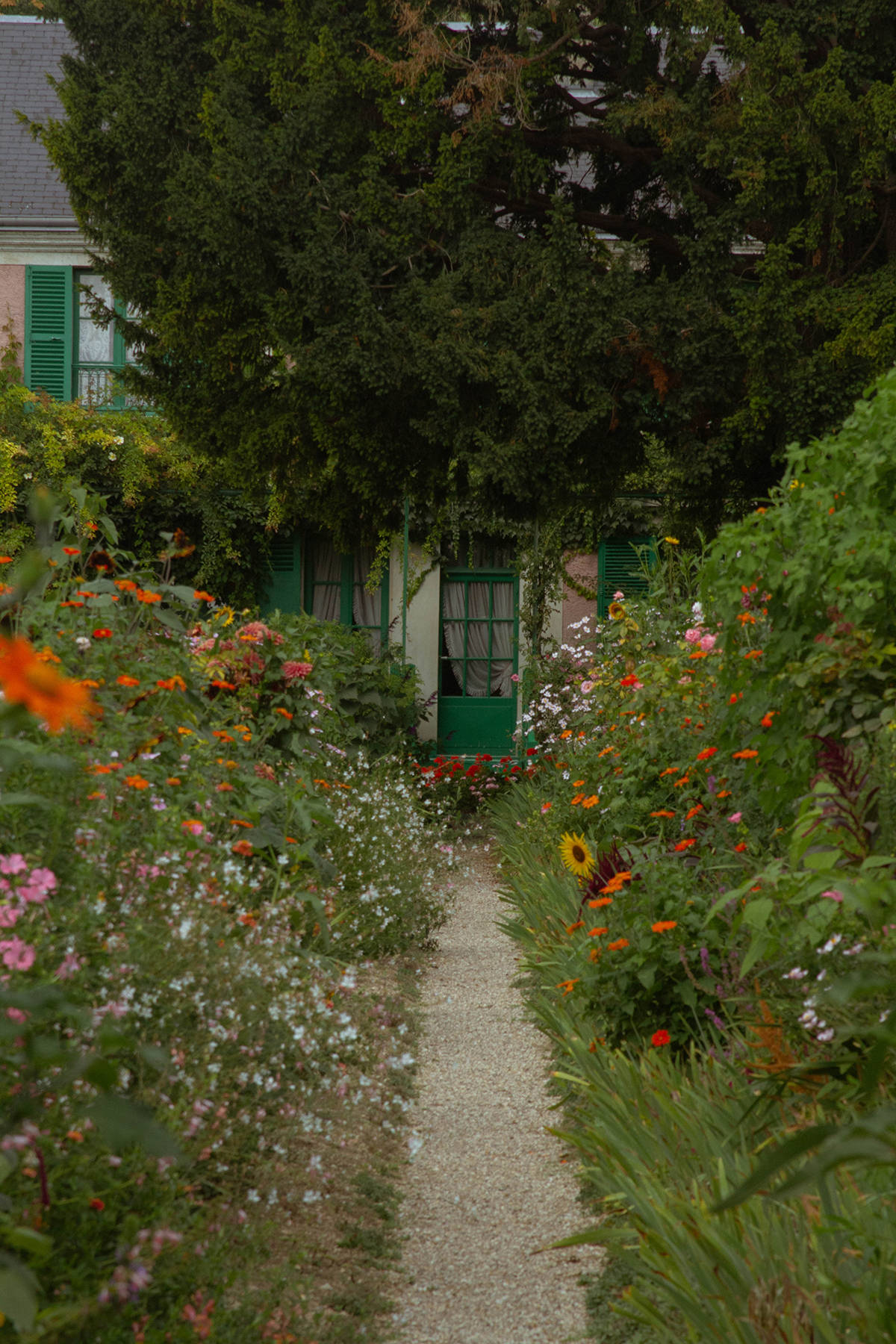
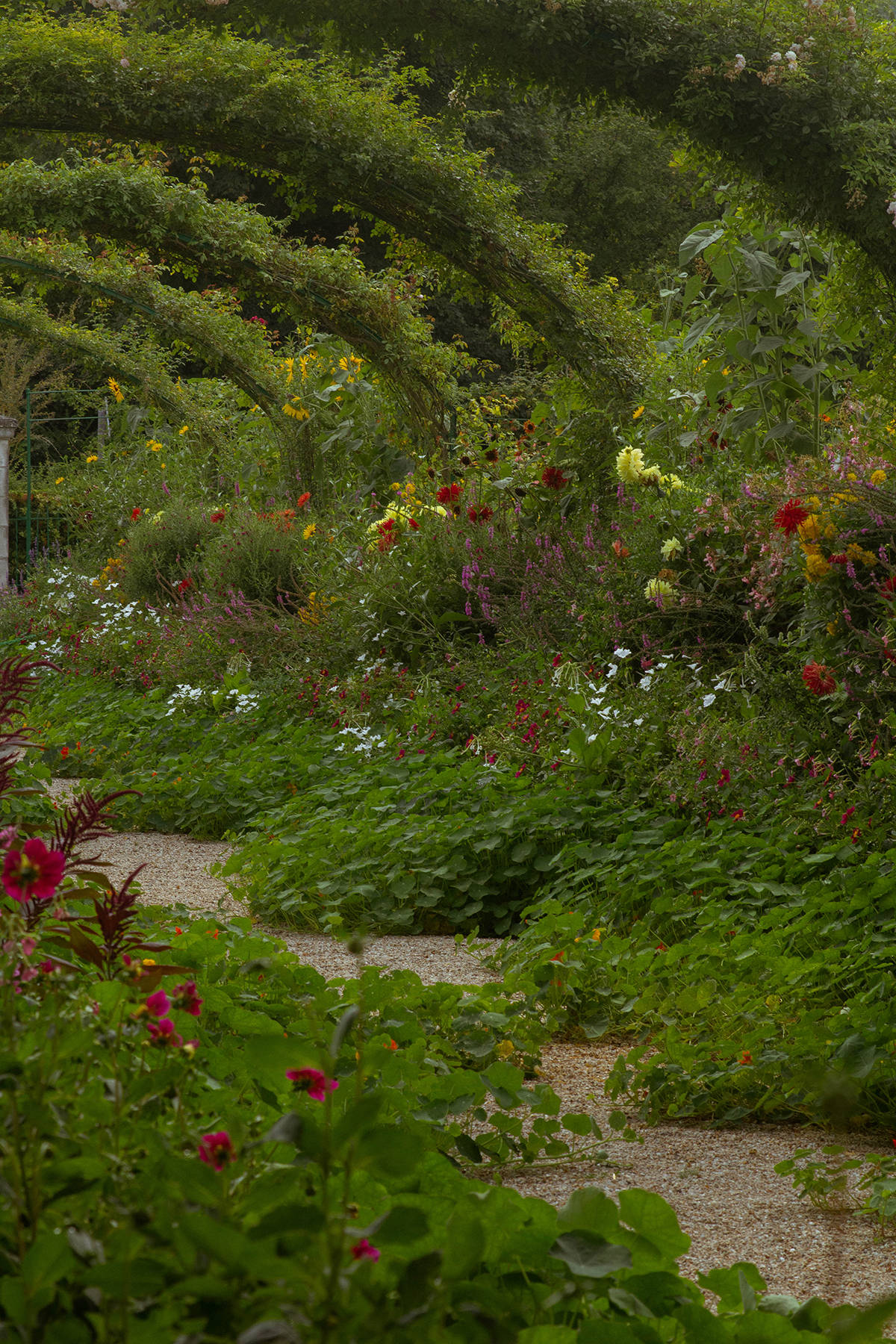
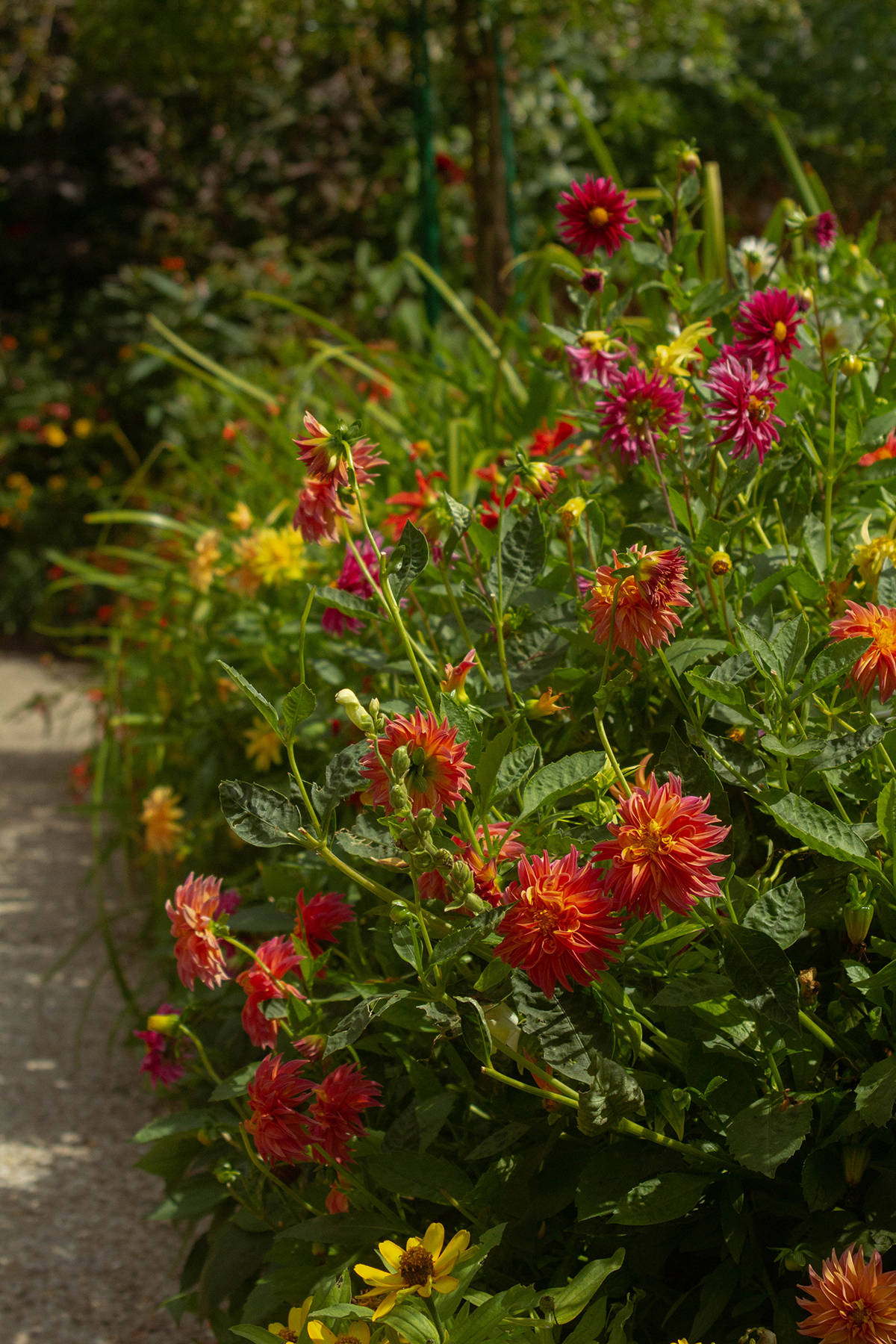
When I finally peeled myself away from the shaded sanctuary that is the water garden, we headed for the Clos Normand. Where one garden was dominated by lush green, this one was a riot of colour – deep jewel tones, bright reds, oranges and yellows, with a variety of dahlias and nasturtiums dominating the view of the pink house. Though in comparison the water gardens were busier, this garden felt busier. Fewer trees to absorb noise, lower planting and thus clear lines of sight mean that there’s no getting away from the crowds.
The Pink House
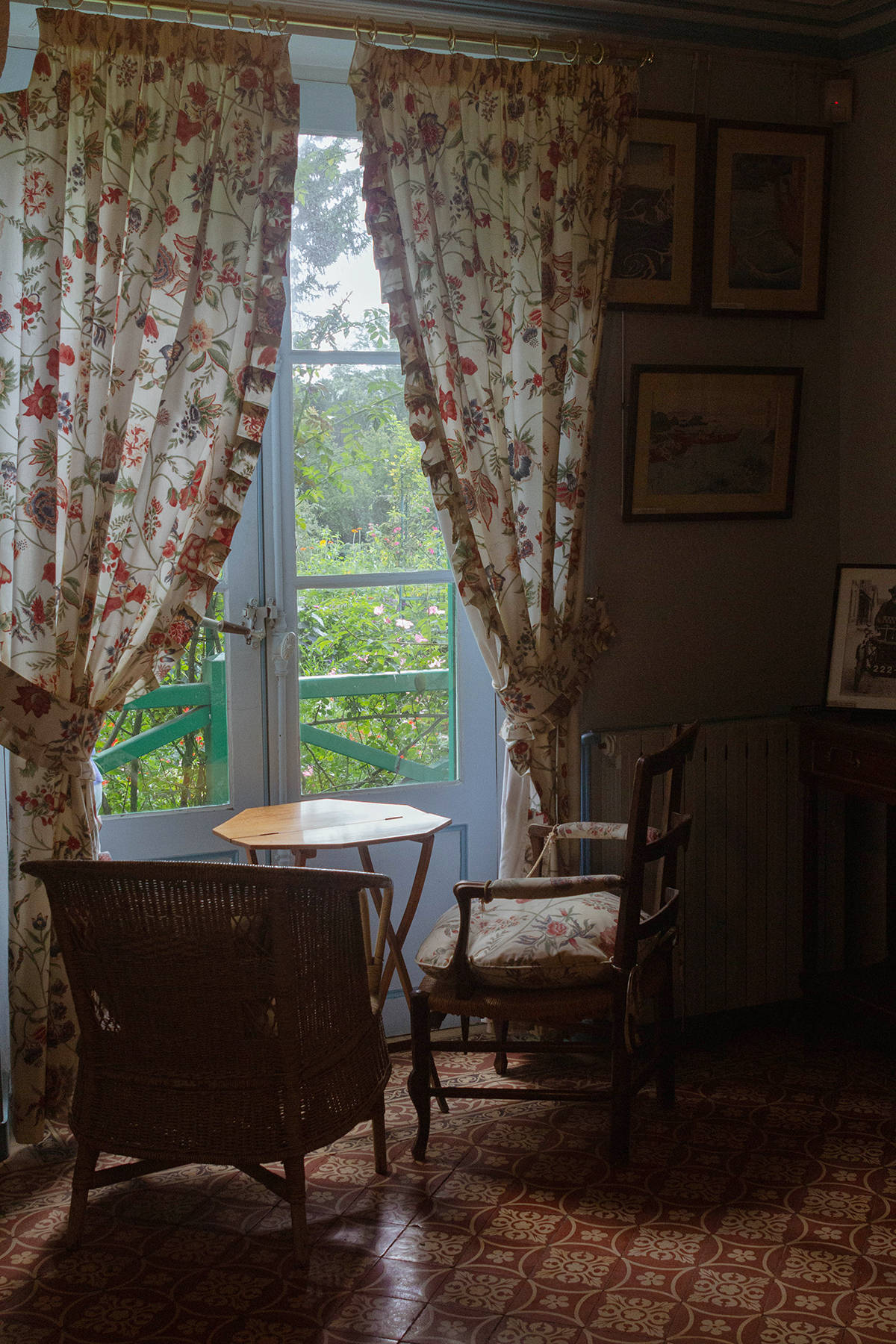
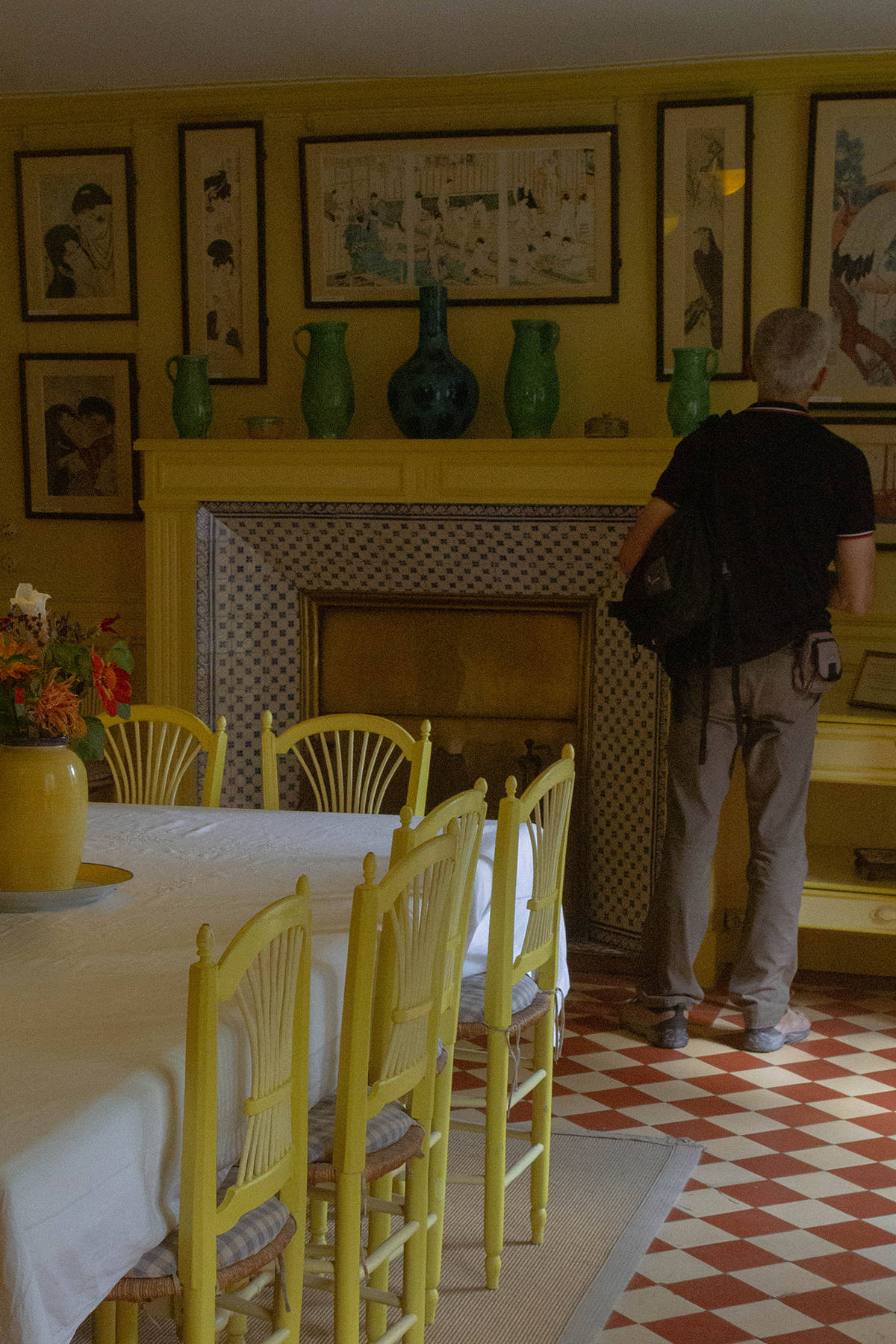
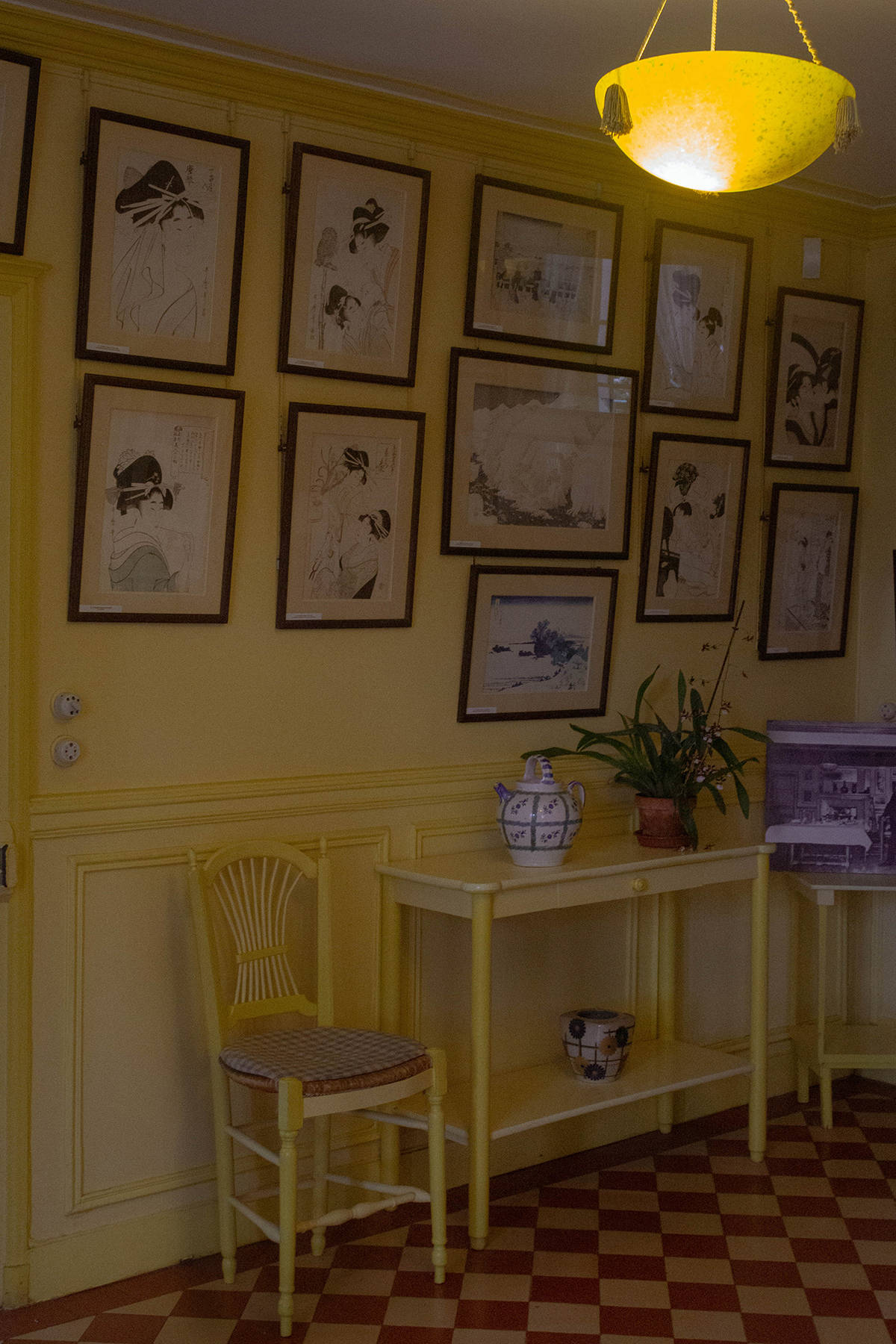
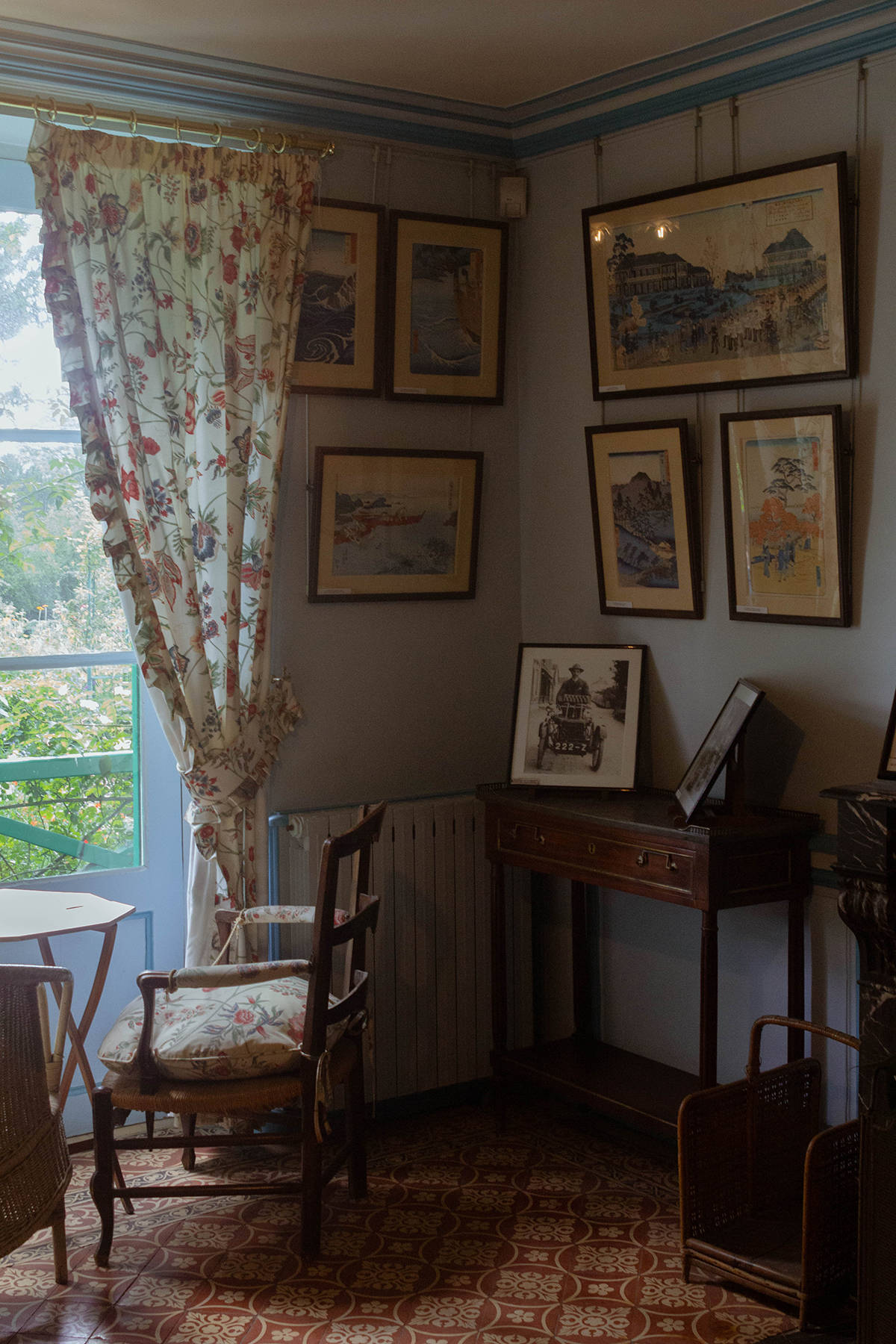
Monet’s love for colour doesn’t limit itself to the outdoors. As we stepped inside, a clear colour scheme for each room on the ground floor became apparent: A pale blue study, a pastel yellow dining room and a baby blue kitchen. Each of the rooms strictly adhered to the chosen colours, yet never felt rigid or overwhelming. In fact, I found myself smiling throughout!
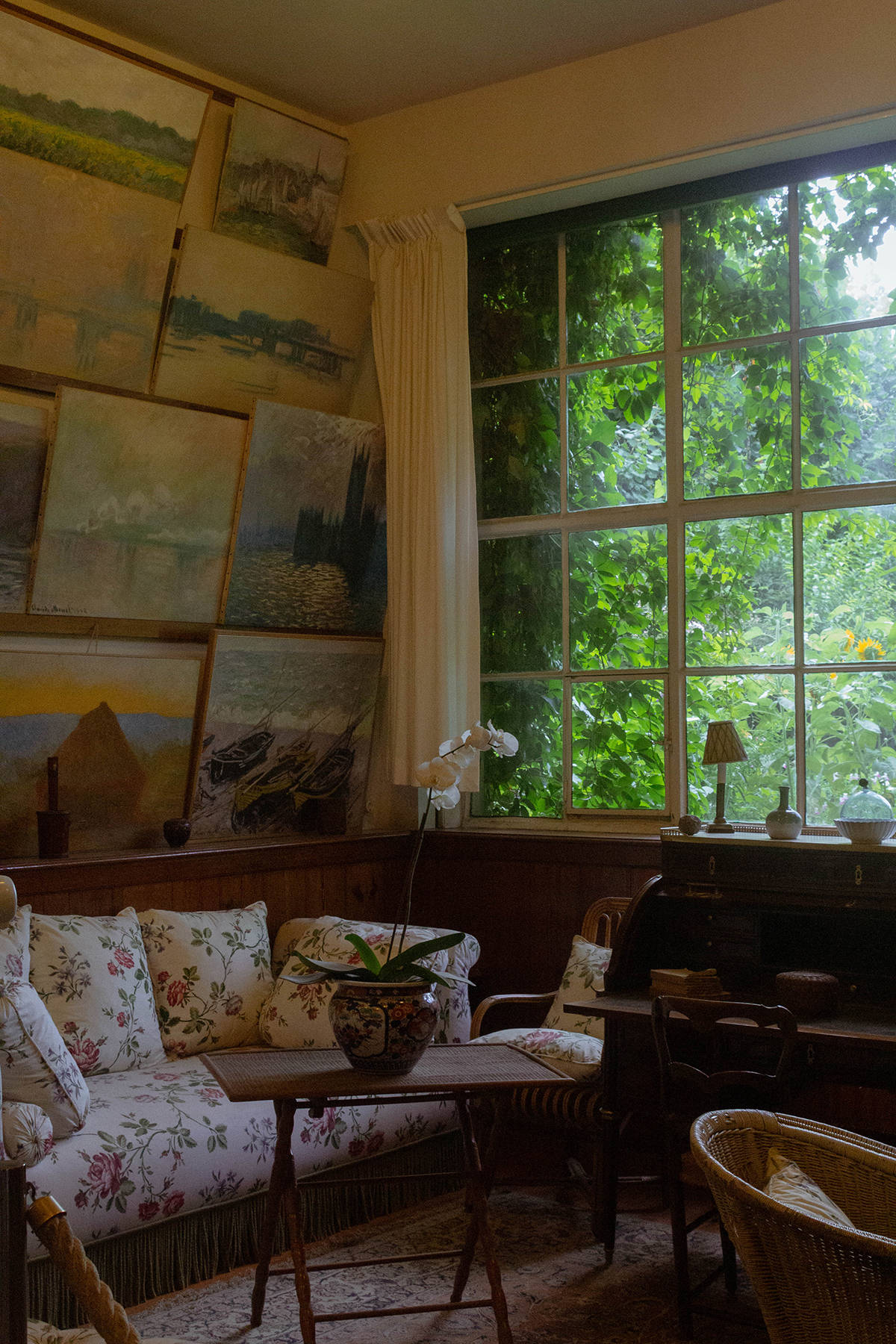
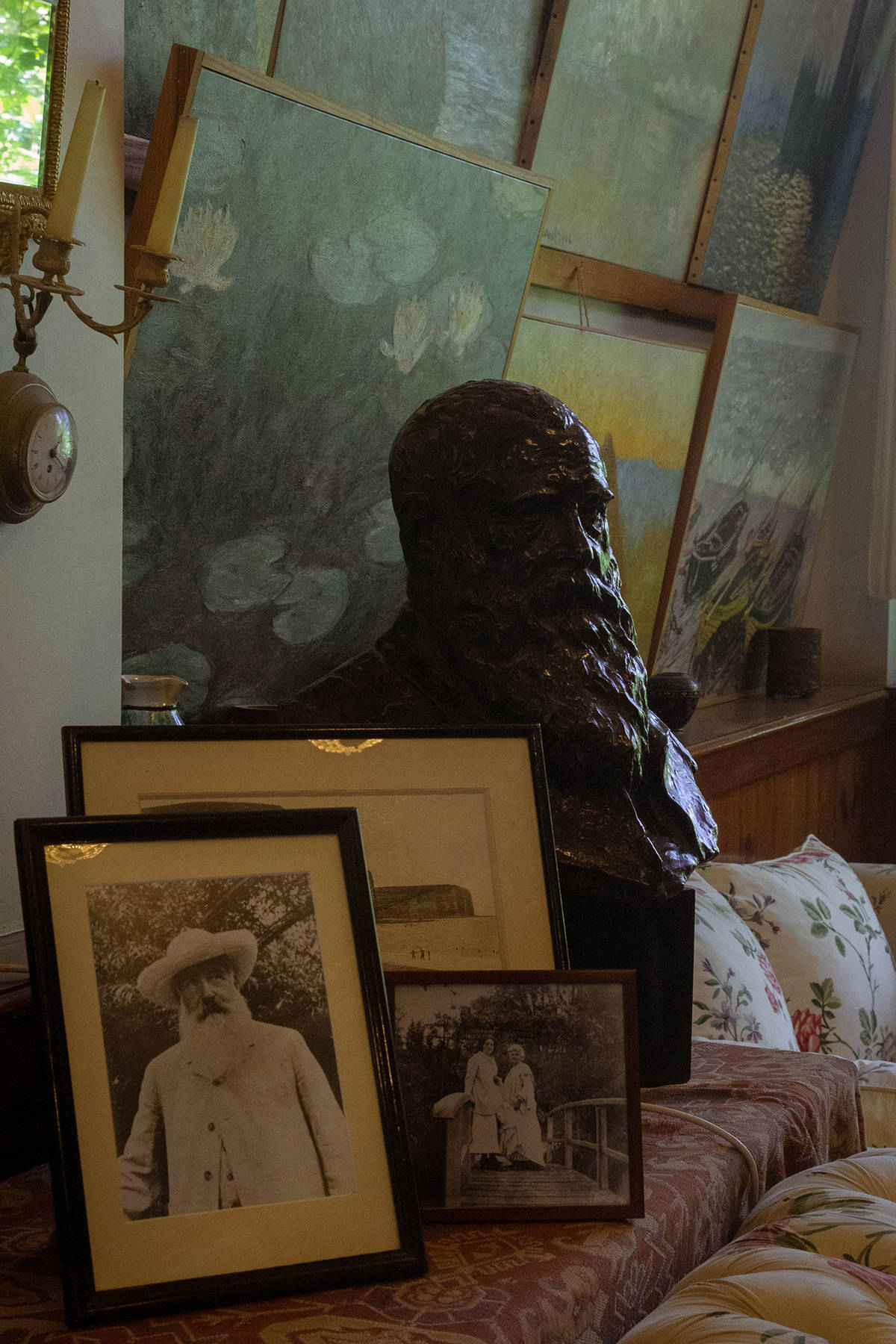
Attached to the main house is the first studio – in use until the waterlily studio was built. Reproductions of the artist’s works line the walls from floor to ceiling, while family photographs and rattan furniture add a decidedly relaxed feel.
A small piece of Japan in France
Monets love of Japan is well known, and Japanese art was a major influence on Impressionism. At Giverny, it stretches throughout the gardens and house; the bridges clearly inspired by traditional architecture, the planting including bamboo and peonies, and the rooms inside the house lined with over a hundred prints by Ukiyo-e masters.

At the end of the day…
Giverny lived up to all my expectations and – dare I say it – surpassed them. I may have cried (but shh – don’t tell anyone). To say I knew it would be amazing would be a lie but my friend was certainly taken aback by just how big my enthusiasm was. At Giverny, Monet created not only a garden for all seasons but a domaine that will forever be associated with an entire art style. And the gardens truly are Impressionism personified.

German in Scotland | Weekend Adventurer